From Wicker to Other Fibres: The Plurality of Iberian Basketry
Part One
At Casa Atlântica we work with craftsmanship in many of its forms, but basketry is the place we always return to: a language we understand and continue to explore every day with growing curiosity.
I have always learned at home, in a natural way, observing and practising alongside my father, the artisan Álvaro Leiro, but also beyond it: with professionals and anonymous craftspeople, in spaces where knowledge does not always have a name, and, as in any craft, also in a self-taught way.
Each basket with its wicker
Wicker is a natural fibre obtained from a shrub in the willow family (Salix), whose flexible branches are woven to create furniture, baskets and other useful objects. Its lightness and strength have made it a classic material in traditional basketry in Europe and beyond.
Although conventional approaches often reduce basketry to wicker, this material is only one part of a much richer and more diverse tradition. Wicker stands out for its flexibility, which allows complex structures to be shaped, as well as for its lightness and durability.
But Iberian basketry is not limited to wicker. Beyond this classic material, there are other fibres and techniques that have evolved in step with the landscapes of the peninsula, giving rise to objects that are as diverse as they are efficient, and deeply connected to their environment. In this post we will review some of them—not all of them—because there are countless examples.
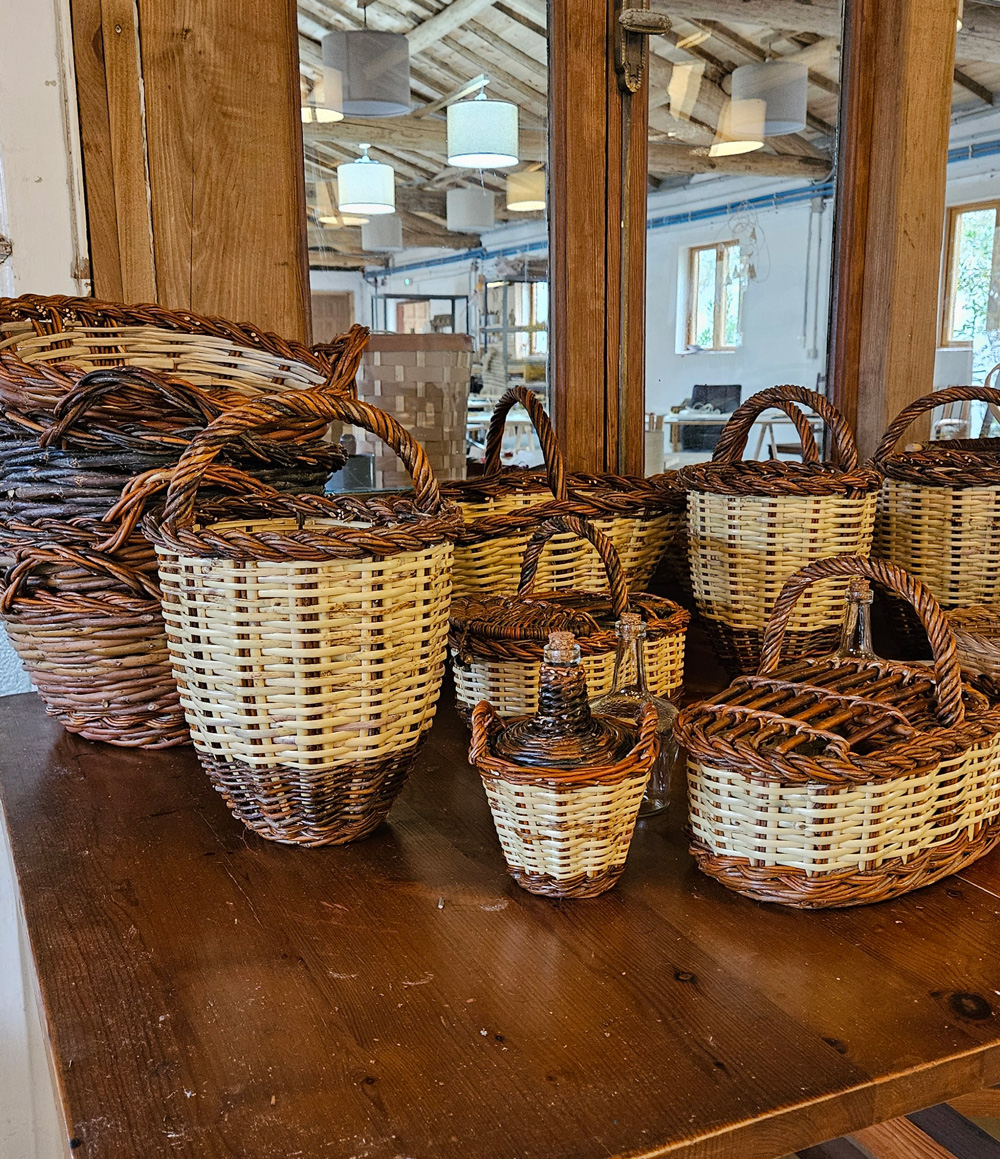
Wicker and cane baskets by Pau Trepat
Wicker and cane baskets by Pau Trepat
Each basket with its wicker
Wicker is a natural fibre obtained from a shrub in the willow family (Salix), whose flexible branches are woven to create furniture, baskets and other useful objects. Its lightness and strength have made it a classic material in traditional basketry in Europe and beyond.
Although conventional approaches often reduce basketry to wicker, this material is only one part of a much richer and more diverse tradition. Wicker stands out for its flexibility, which allows complex structures to be shaped, as well as for its lightness and durability.
But Iberian basketry is not limited to wicker. Beyond this classic material, there are other fibres and techniques that have evolved in step with the landscapes of the peninsula, giving rise to objects that are as diverse as they are efficient, and deeply connected to their environment. In this post we will review some of them—not all of them—because there are countless examples.
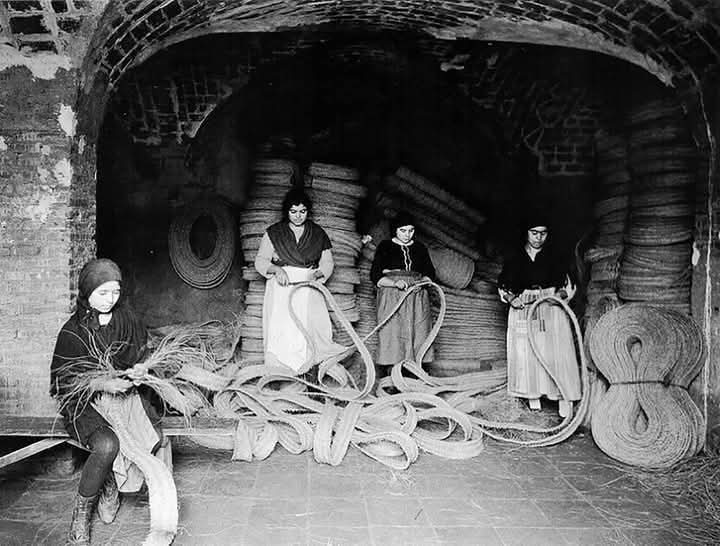
Esparto weavers of Extremadura
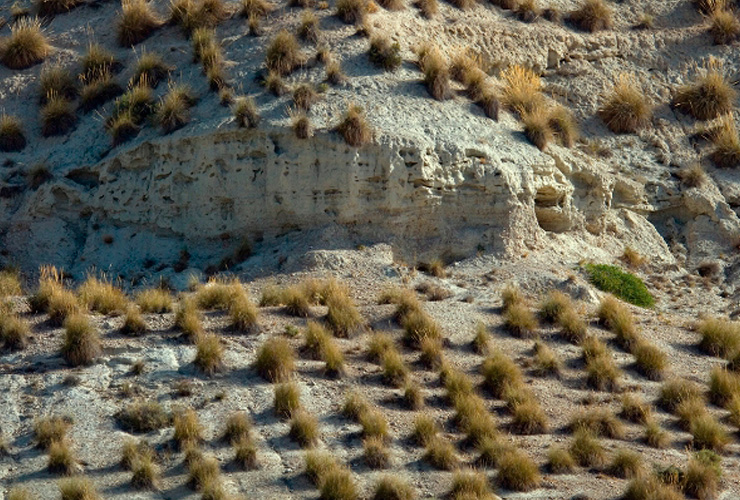
Esparto landscape – © Museo del esparto de Cieza
Harder than esparto
Esparto grass is one of the most representative fibres of Iberian basketry, especially in the dry areas of the south and the interior of the peninsula. The term esparto is commonly used to refer to the leaves, while the plant as a whole is known as espartera or atocha. Given its importance in past economies, esparto has even left its mark on place names: such as the Atocha neighbourhood in Madrid, which owes its name to the historical abundance of this plant in the area.
Esparto was used to make cords, footwear, large baskets and agricultural tools. It was a strategic fibre: resistant, durable and readily available. Unlike wicker, esparto does not seek lightness or extreme flexibility. It demands strength, technique and deep knowledge of the material. Its aesthetic is a direct consequence of its function: sober, robust and honest.
Today, esparto is experiencing a revival thanks to workshops and artisans who have managed to update this knowledge without stripping it of its character. A recent example is Ubedíes Artesanía, the workshop led by Pedro Antonio Blanco Ubalde, which has just received the National Craft Prize. Esparto work was always a humble trade, never properly valued or fairly paid. But it seems that, at last, we are beginning to recognise the cultural heritage we had all along.
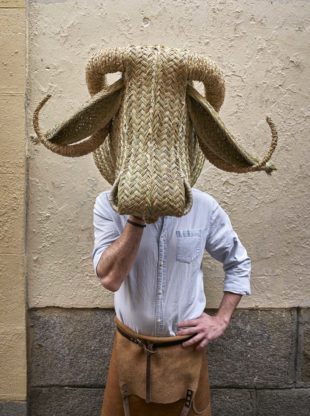
Esparto skeins – Javier Sánchez – © Álvaro Felgueroso
Esparto skeins – Javier Sánchez – © Álvaro Felgueroso
Today, esparto is experiencing a revival thanks to workshops and artisans who have managed to update this knowledge without stripping it of its character. A recent example is Ubedíes Artesanía, the workshop led by Pedro Antonio Blanco Ubalde, which has just received the National Craft Prize. Esparto work was always a humble trade, never properly valued or fairly paid. But it seems that, at last, we are beginning to recognise the cultural heritage we had all along.
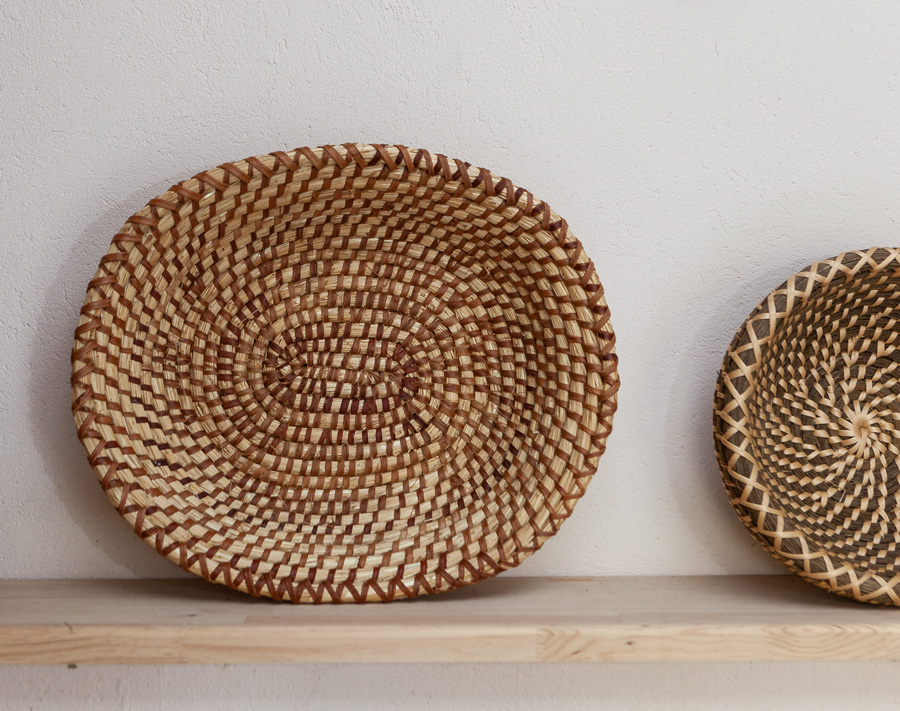
Baskets – © Álvaro Leiro
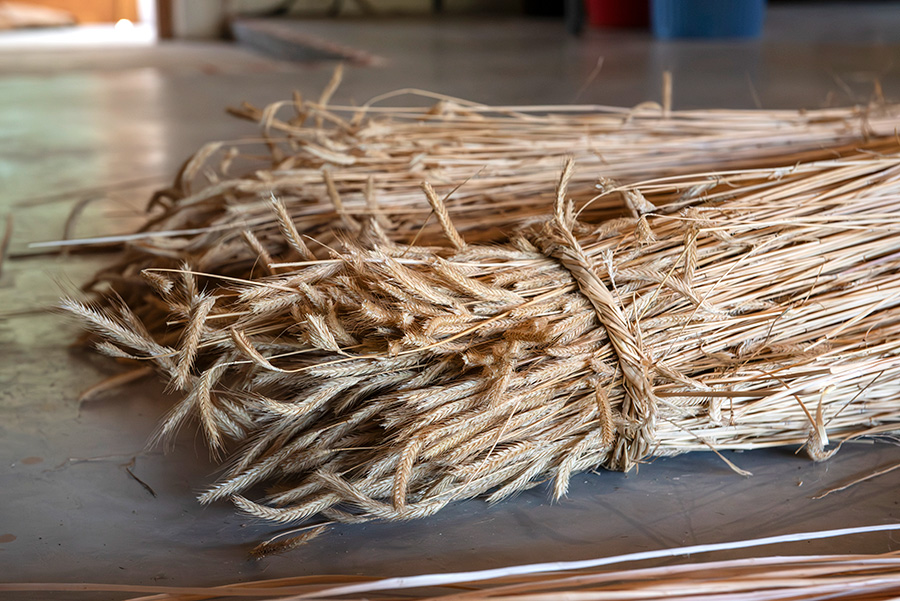
Light as straw
One of the oldest techniques in the peninsula’s repertoire is spiral basketry, where fibres (such as rye straw or cereal straw) are coiled around themselves and sewn together with materials like bramble or thin strips of wicker.
This method produces closed, robust and compact baskets, traditionally used as storage containers for grain or dry goods. Their spiral construction makes each object literally a record of repeated gestures: turn after turn, stitch after stitch.
Straw is also used in objects not meant to contain, but to protect. Among them are straw hats, widespread in different regions, such as the Galician Sancosmeiro.
The technique requires precision and regularity: first the strips are braided, then they are sewn together. The thickness of the straw braid and the rhythm of the spiral determine both the strength and the comfort of the piece. They are light objects, yet structurally complex, designed to accompany long days of outdoor work.

Sancosmeiros – © Ramón Dimas, 1956
Sancosmeiros – © Ramón Dimas, 1956
The technique requires precision and regularity: first the strips are braided, then they are sewn together. The thickness of the straw braid and the rhythm of the spiral determine both the strength and the comfort of the piece. They are light objects, yet structurally complex, designed to accompany long days of outdoor work.
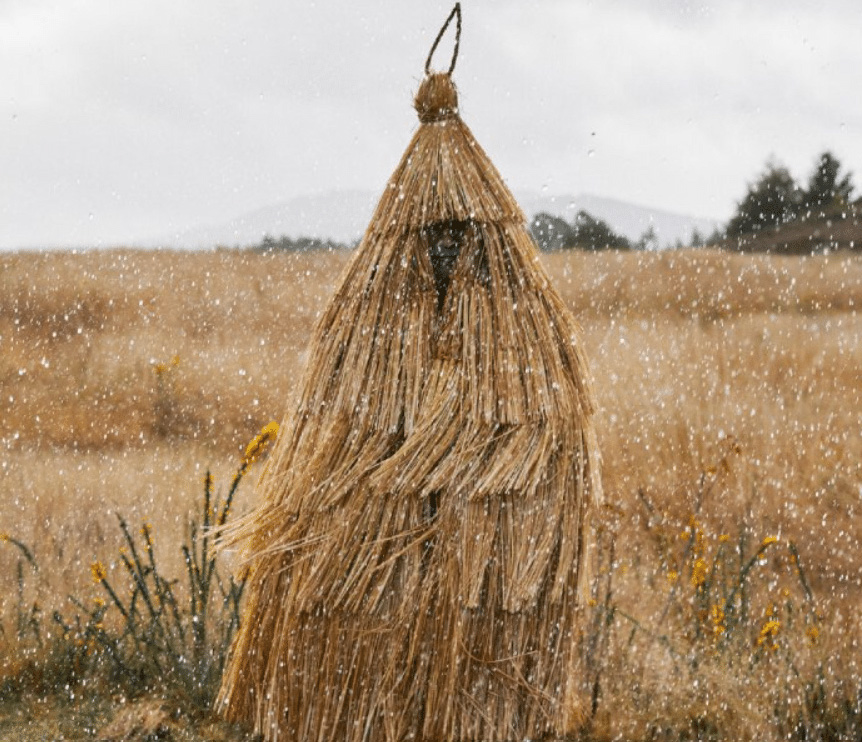
Álvaro Leiro for Loewe – © Yago Castromil
Flexible as rush
A distinctive chapter in basketry from the northwest of the Iberian Peninsula is that of the corozas: utilitarian garments made from woven rush, designed to protect field workers from rain and wind.
These pieces act as bridges between basketry and clothing: they use the same fibres, the same braiding and sewing techniques, but applied to the human body.
Crossing the border into Portugal, another notable variation appears: rush basketry worked on a loom. Instead of the typical manual interlacing, the fibres are dyed beforehand in bright colours and arranged in structures that more closely resemble textile weaving, with warp and weft crossing in regular patterns.
This approach allows for flatter surfaces and repetitive patterns, turning rush into a material that, although vegetal, engages with techniques typically associated with looms. The result is pieces that are very different from traditional wicker or esparto baskets, with a defined visual rhythm and a more graphic treatment of the fibre.
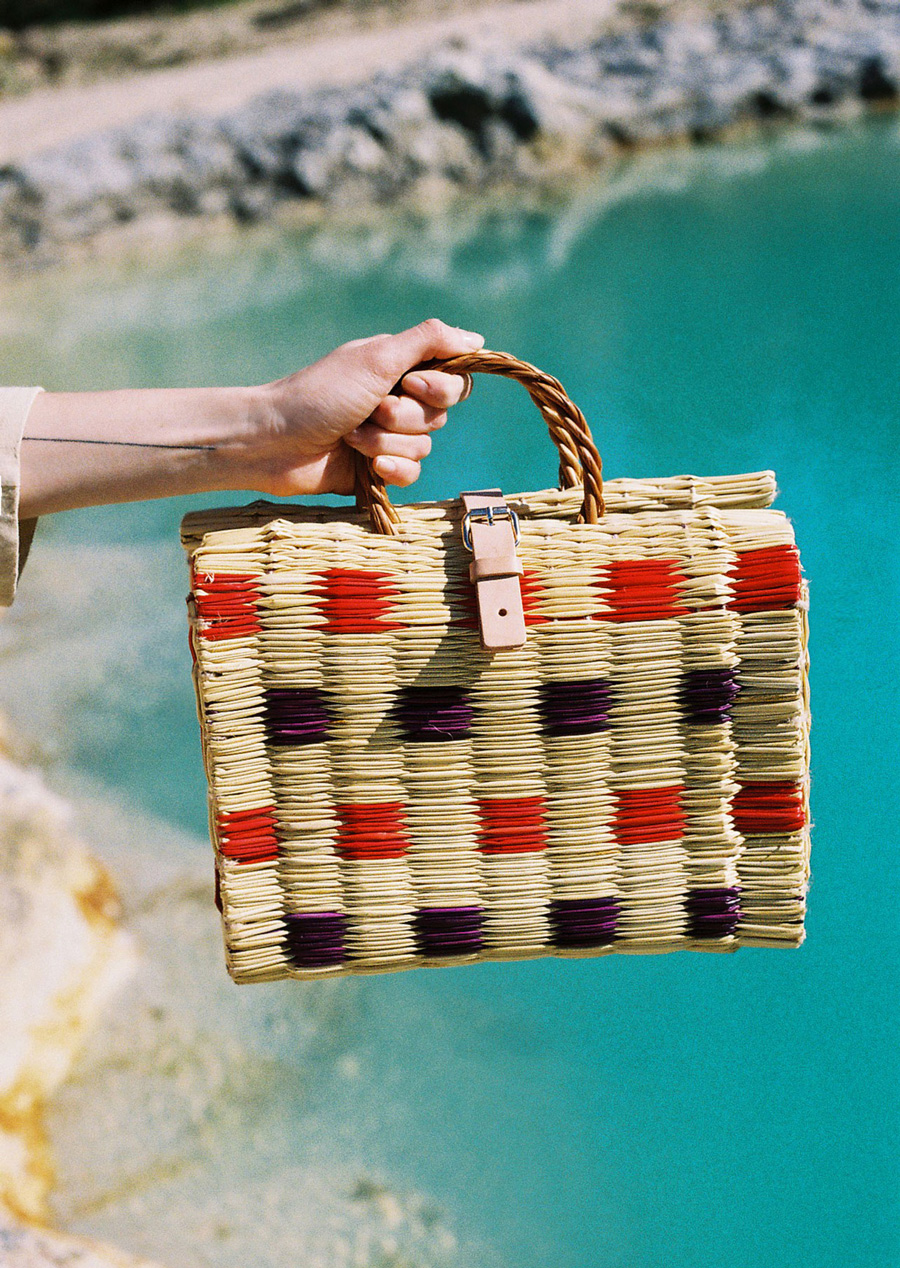
Rush basket – © Toino Abel
Rush basket – © Toino Abel
Crossing the border into Portugal, another notable variation appears: rush basketry worked on a loom. Instead of the typical manual interlacing, the fibres are dyed beforehand in bright colours and arranged in structures that more closely resemble textile weaving, with warp and weft crossing in regular patterns.
This approach allows for flatter surfaces and repetitive patterns, turning rush into a material that, although vegetal, engages with techniques typically associated with looms. The result is pieces that are very different from traditional wicker or esparto baskets, with a defined visual rhythm and a more graphic treatment of the fibre.