From wicker to other fibers: the plurality of Iberian basketry
Part two
Taking the palm
The palm used to weave baskets, brooms and hats comes from the only wild European palm plant, the dwarf palm. The braiding of strips (llates) of palm leaves gave rise to a distinctive craft, developed by the llatadoras.
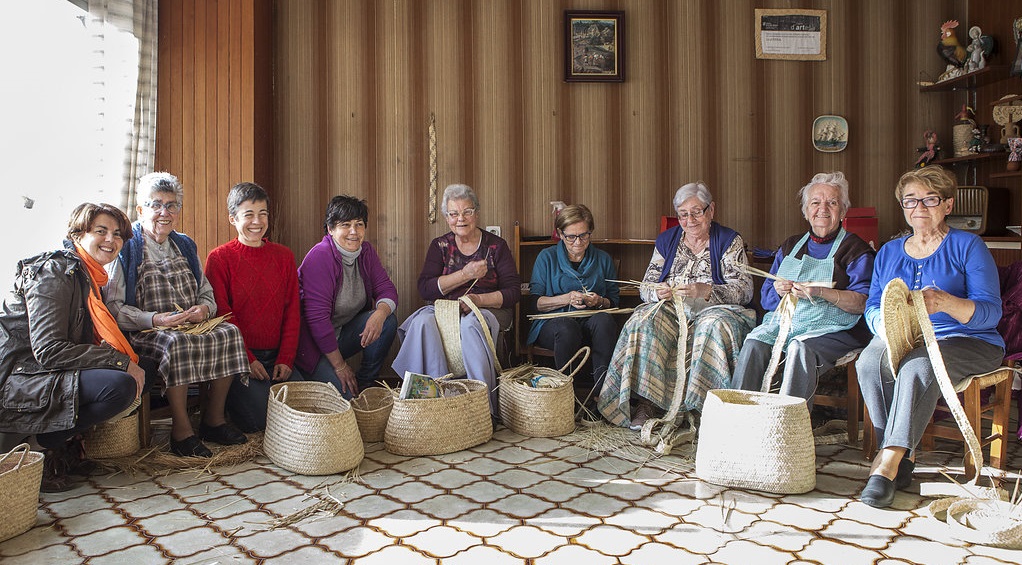
© Antic Mallorca
© Antic Mallorca
Taking the palm
The palm used to weave baskets, brooms and hats comes from the only wild European palm plant, the dwarf palm. The braiding of strips (llates) of palm leaves gave rise to a distinctive craft, developed by the llatadoras.
© Antic Mallorca
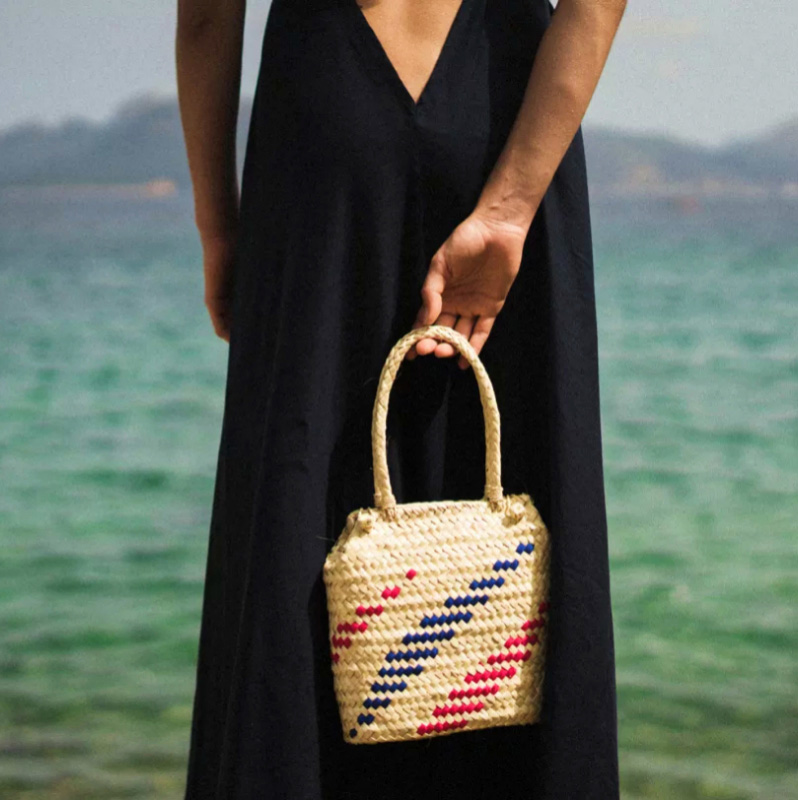
Palm basketry is one of the most characteristic traditions of the Mediterranean region. Unlike harder fibers such as esparto, palm offers a natural flexibility that allows for lighter, more continuous and precise work, resulting in resistant pieces that are visually more open.
In the Peninsula and, very notably, in the Balearic Islands, palm has been linked both to everyday use and to festive and seasonal contexts. Balearic baskets are perhaps the most recognizable example: large containers designed to transport agricultural products, fish or household goods, but also to accompany daily life in warm climates.
Beyond its practical use, palm basketry has adapted to the present without losing its roots. Baskets in particular have moved from rural settings into domestic and urban environments, maintaining their original structure while taking on new uses.
Solid wood
Wood-slat basketry occupies a unique place within Iberian tradition. Unlike other more flexible plant fibers, here the material requires more intensive prior work: the wood —usually chestnut, hazel or young oak— is split into thin slats which are then interwoven to form solid and durable containers.
This type of basketry has been especially present in forested areas of northern Iberia, where the abundance of wood shaped both the materials and technical solutions. The resulting pieces are usually large in size, designed for carrying, transport or storage, and stand out for their structural character.
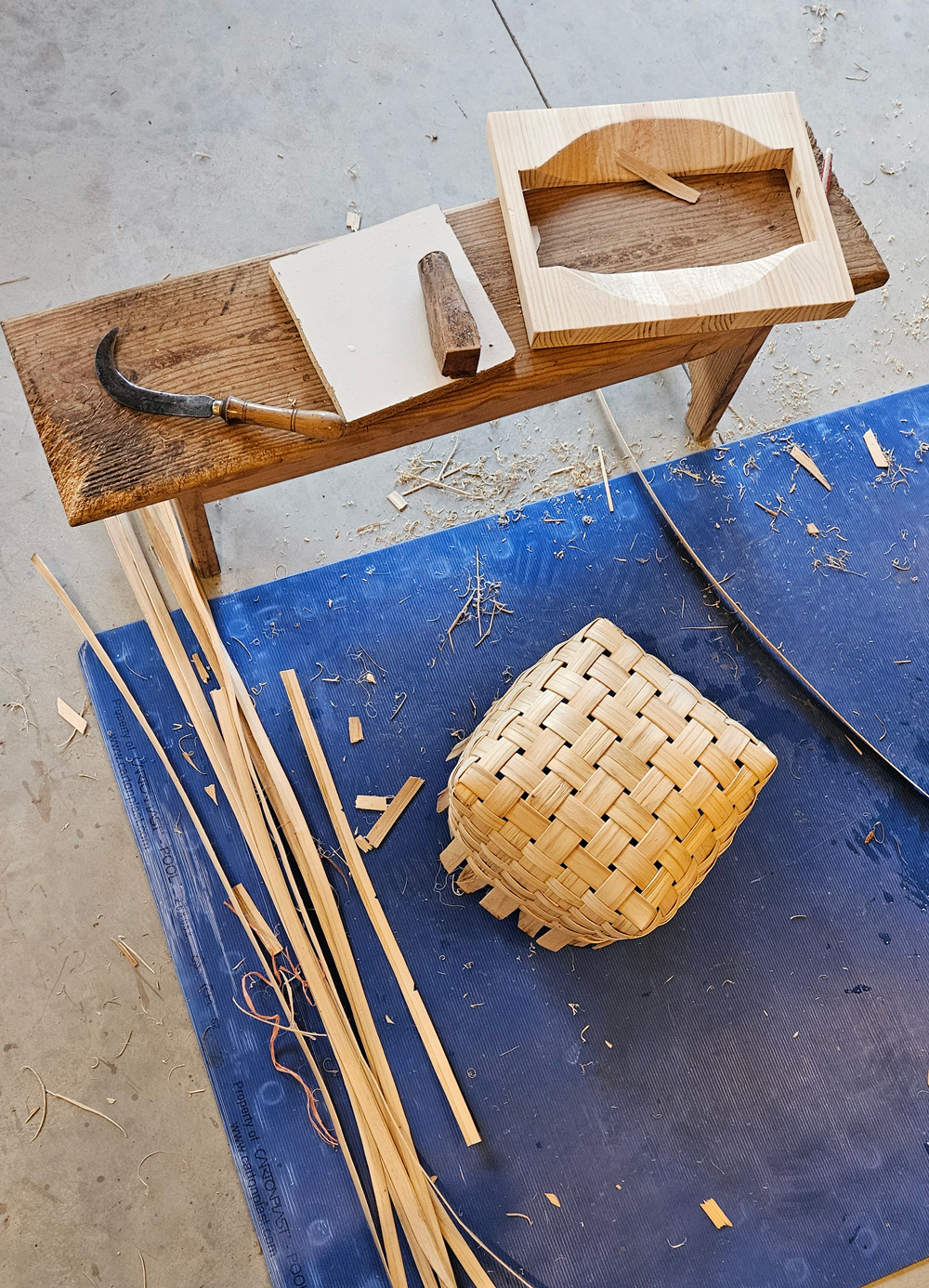
Wood basketry
Wood basketry
Solid wood
Wood-slat basketry occupies a unique place within Iberian tradition. Unlike other more flexible plant fibers, here the material requires more intensive prior work: the wood —usually chestnut, hazel or young oak— is split into thin slats which are then interwoven to form solid and durable containers.
This type of basketry has been especially present in forested areas of northern Iberia, where the abundance of wood shaped both the materials and technical solutions. The resulting pieces are usually large in size, designed for carrying, transport or storage, and stand out for their structural character.
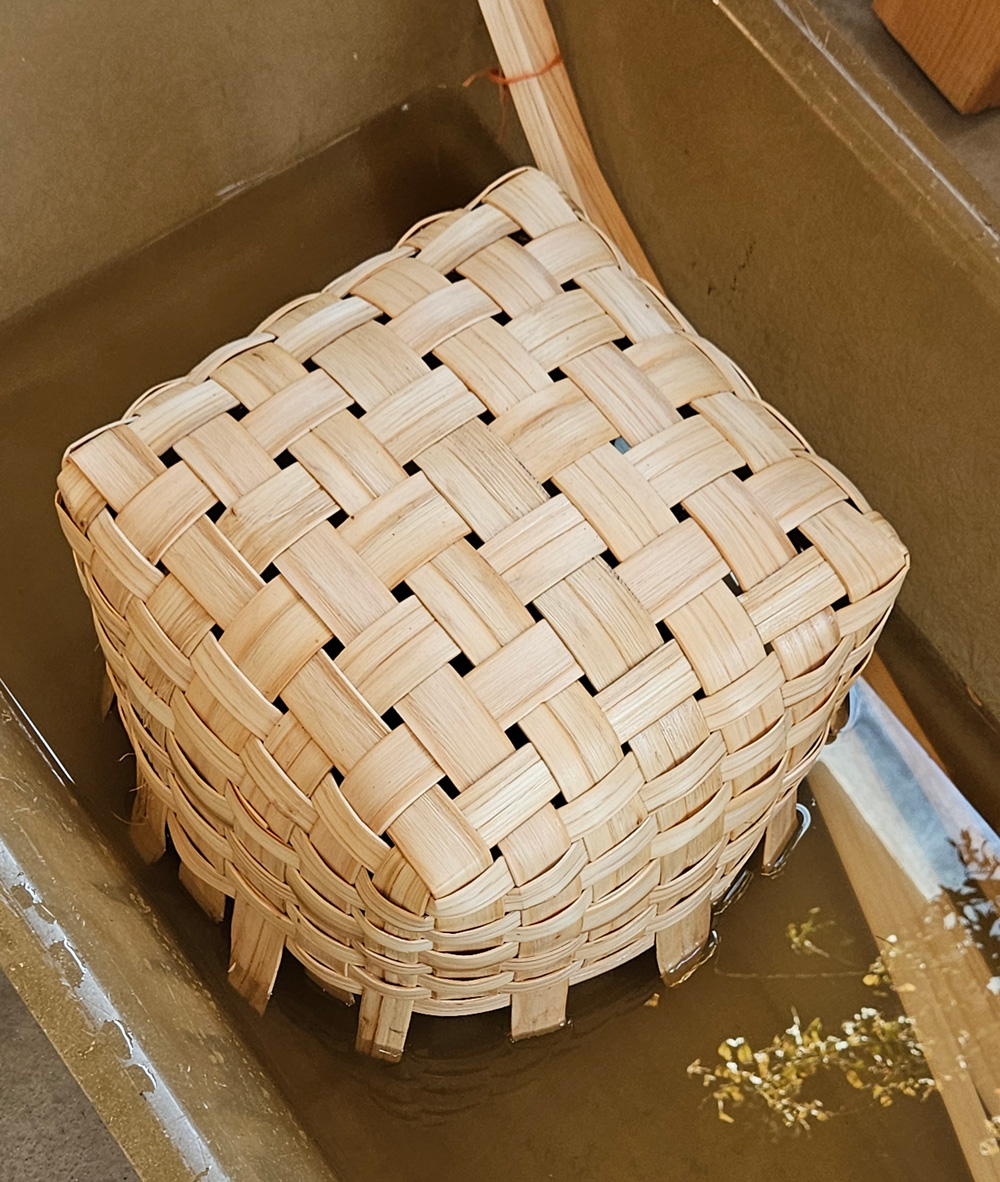
Wood basketry
Unlike other basketry types, here the priority is strength, the ability to support weight and continuous use. The weave is more open, the form more geometric, and the structure often remains visible, almost like a skeleton supporting the object. It is work that requires precision and knowledge, where each slat has a specific role within the whole.
And for tastes, colors.
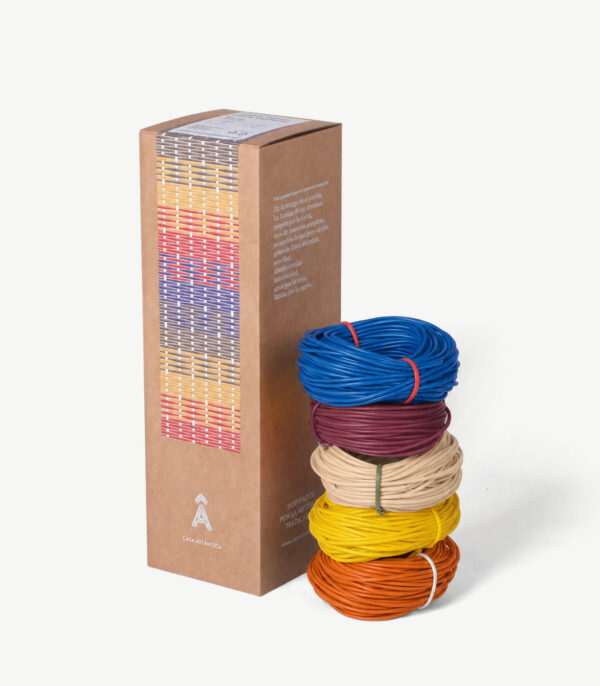
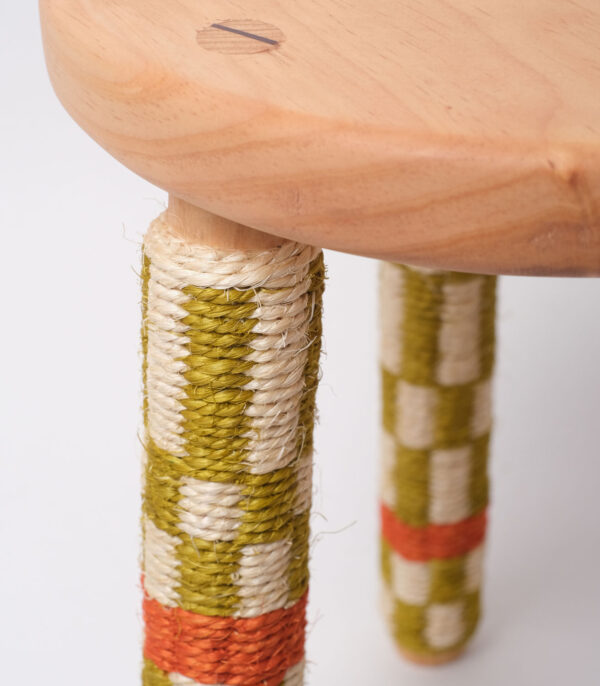
But the history of Iberian basketry does not end with plant fibers. For decades —especially in rural and domestic contexts— another form of basketry emerged made from reused electrical cables, popularly known as scoubidou. It was not an academic or institutionalized technique, but a practice born from reuse, scarcity and everyday ingenuity.
These cables, flexible and resistant, were braided following logics very similar to traditional basketry: repetition of gesture, structure, rhythm and functionality. Although it is not a natural fiber, it is still a local, available material, worked from the same principle that has always guided craftsmanship: using what is at hand.

Clementina – Casa Atlântica
Clementina – Casa Atlântica
And for tastes, colors.
But the history of Iberian basketry does not end with plant fibers. For decades —especially in rural and domestic contexts— another form of basketry emerged made from reused electrical cables, popularly known as scoubidou. It was not an academic or institutionalized technique, but a practice born from reuse, scarcity and everyday ingenuity.
These cables, flexible and resistant, were braided following logics very similar to traditional basketry: repetition of gesture, structure, rhythm and functionality. Although it is not a natural fiber, it is still a local, available material, worked from the same principle that has always guided craftsmanship: using what is at hand.

Rita – Casa Atlântica
This basketry did not originate in workshops or schools, but in homes, patios and garages, created by anonymous artisans who adapted inherited techniques to new materials. It is popular folklore in its purest state: knowledge passed on without a proper name, but with continuity.
At Casa Atlântica we wanted to recover this technique, not as a curiosity but as a legitimate part of basketry history. Because the value lies not only in the vegetal origin of the material, but in the know-how, in the ability to transform, reuse and shape useful objects with available means. Scoubidou basketry reminds us of something essential: that tradition is not static, that craft adapts, and that the artisanal gesture can survive even when the fiber changes.
It is never too late to learn
Nor is it too late to buy directly from artisans, which not only allows you to own objects with deep and lasting meaning, but also sustains living crafts and forms of knowledge that are not mass-produced.
And if what interests you is diving into any of these techniques, here are some people, workshops and references with whom you can learn, see, practice or acquire authentic basketry —both traditional and contemporary— depending on your interests. These names are just some of those actively making and teaching basketry today; there are many more. Also countless local artisans whose knowledge lives in their villages, markets and workshops:
– Mónica Guilera
– Tim Johnson
– Pau Trepat
– Enrique Táboas
– Idoia Cuesta
– Álvaro Leiro
– Sonia Lekuona
– Talleres Nómadas Mallorca
– Carlos Fontales
– Myself with Casa Atlântica 😉
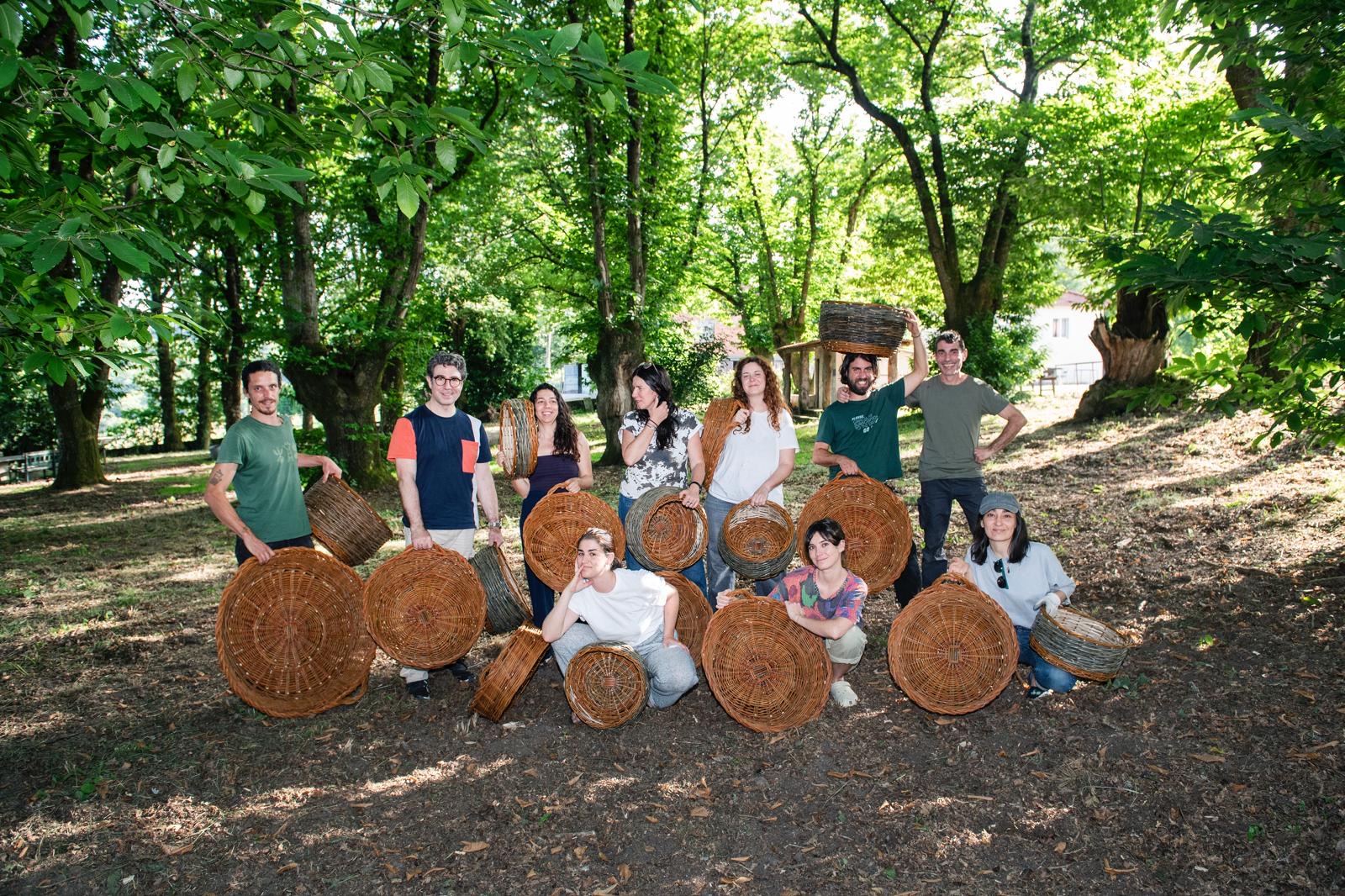
Fibranzas – © Artesanía de Galicia
Fibranzas – © Artesanía de Galicia
It is never too late to learn
Nor is it too late to buy directly from artisans, which not only allows you to own objects with deep and lasting meaning, but also sustains living crafts and forms of knowledge that are not mass-produced.
And if what interests you is diving into any of these techniques, here are some people, workshops and references with whom you can learn, see, practice or acquire authentic basketry —both traditional and contemporary— depending on your interests. These names are just some of those actively making and teaching basketry today; there are many more. Also countless local artisans whose knowledge lives in their villages, markets and workshops:
– Mónica Guilera
– Tim Johnson
– Pau Trepat
– Enrique Táboas
– Idoia Cuesta
– Álvaro Leiro
– Sonia Lekuona
– Talleres Nómadas Mallorca
– Carlos Fontales
– Myself with Casa Atlântica 😉